
What key information should be included on hazardous waste container labels?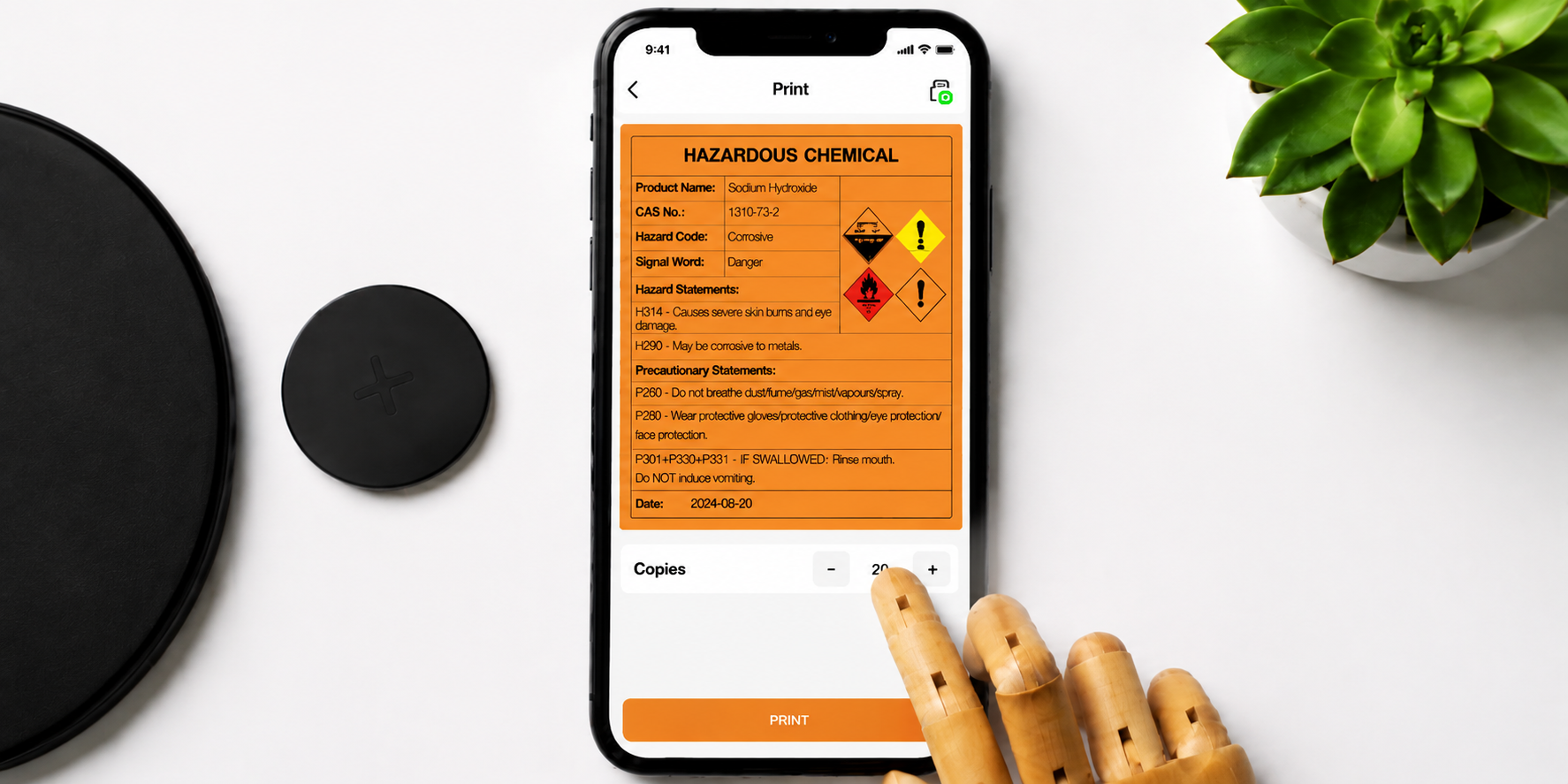
The clarity of information directly impacts operational efficiency. Although container labeling is a fundamental step in hazardous waste management, it plays a crucial role in classification, notification, verification, and handover; missing labels or inconsistent formats will bring extra costs for later tracking, maintenance and compliance management.
Clearly marking the name, category, date, and responsible party is vital for the standardized on‑site management of hazardous waste. Establishing standardized fields for names, ID numbers, and status — tailored to common waste items — enables on‑site personnel to quickly grasp information, and ensures that management requirements are intuitively applied to physical waste containers.
It is advisable to first identify high‑frequency labeling scenarios, then build fixed templates for regular fields for hazardous waste labels. This workflow makes flexible label printing available: you only need to edit necessary details while adding new waste materials, adjusting storage locations or dealing with ad‑hoc tasks, so as to keep consistency among different batches of labels.
Integrating label production into daily workflows allows scattered information to gradually evolve into actionable management standards. Clear, timely, and easily‑identifiable on‑site labeling supports reliable hazardous waste management, improves team collaboration efficiency and reduces operational errors for full‑process compliance.
#hazardous waste labels #hazardous waste management #container labeling #compliance management #label printing